
The End of Welding
How Bending Eliminates Production Bottlenecks and Increases Efficiency For decades, welding has been an integral part of metal fabrication. While...
When evaluating new tube and pipe bending equipment, it’s natural to focus on the upfront investment. Capital equipment purchases are significant, and initial cost is often the first—and sometimes only—number considered during decision-making.
However, the purchase price is just one piece of a much larger financial picture.
In bending operations, where precision, repeatability, and uptime are critical, the total cost of ownership (TCO) has a far greater impact on long-term profitability than the initial price alone.
Factors like tooling wear, machine reliability, setup efficiency, and downtime can significantly influence performance—especially in high-volume or tight-tolerance applications.
A lower-cost machine may appear attractive at the start, but over time, hidden costs can quickly accumulate—impacting production schedules, product quality, and overall throughput.
This is why leading manufacturers are shifting their focus from:
“What does the machine cost?”
to
“What will it cost to run this bending operation over time?”
Understanding Total Cost of Ownership in Bending Operations
Total cost of ownership (TCO) is a familiar concept for most manufacturers—representing the full lifecycle cost of acquiring, operating, and maintaining bending equipment.
While the initial purchase price is the most visible expense, it is often only a portion of the overall investment.
In tube and pipe bending applications, a comprehensive TCO evaluation typically includes:
To simplify this concept, total cost of ownership can be viewed as:
TCO = Initial Investment + Operating Costs + Maintenance Costs + Downtime Costs – Residual Value
While this formula provides a helpful framework, the real impact comes from how bending-specific factors—like tooling life, setup time, and repeatability—affect production over time.
In tube and pipe bending operations, even small inefficiencies can have a major impact on production.
Because bending directly affects part geometry, structural integrity, and downstream assembly, inconsistencies can lead to:
Precision bending processes—such as rotary draw bending—require tight control to maintain consistency and avoid defects like wrinkling or deformation.
That means equipment reliability isn’t just about uptime—it’s about maintaining consistent, repeatable bend quality.
By focusing on total cost of ownership, manufacturers can:
While total cost of ownership is a universal consideration, its impact can vary depending on the application and industry.
In tube and pipe bending operations, different environments place different demands on equipment performance, precision, and reliability.
For example:
Automotive & Transportation
High-volume production requires consistent repeatability and minimal downtime to maintain throughput and meet tight delivery schedules.
Aerospace & Precision Applications
Tight tolerances and strict quality requirements make machine stability and repeatability critical to reducing scrap and rework.
HVAC & Appliance Manufacturing
Efficiency, speed, and tooling longevity play a key role in maintaining cost-effective production.
Defense & Military Applications
Reliability, precision, and consistency are critical in applications where components must meet strict performance and safety standards. Equipment must deliver repeatable results over time while supporting demanding materials and specifications.
Across all applications, the common thread is clear—equipment performance over time has a direct impact on cost, quality, and production efficiency.
Higher-quality bending equipment is designed to maintain precision and repeatability in demanding production environments.
While it may come at a higher upfront cost, it often results in:
In tube and pipe bending, machine stability directly impacts bend accuracy, tooling performance, and part consistency—making reliability a critical driver of long-term cost.
Not all bending machines are created equal when it comes to serviceability and tooling performance.
Consider:
Poorly designed systems can lead to:
Efficient maintenance and ongoing service and support can significantly reduce total operating costs over time.
Downtime is one of the most significant—and often underestimated—costs in bending operations.
Even short interruptions can:
In high-volume bending environments, even minor disruptions can compound quickly.
Reliable equipment, combined with responsive service support, is essential to maintaining consistent throughput.
Energy consumption plays a growing role in total cost—especially in continuous or high-output bending operations.
Modern bending systems designed with efficiency in mind can:
While energy may not always be the largest cost factor, it contributes to overall operational efficiency over the life of the equipment.
Automation in tube and pipe bending improves both productivity and consistency.
Systems designed with integrated automation can:
Advanced control systems and CNC capabilities also help reduce setup time and improve changeover efficiency—further lowering operational costs.
Durability is one of the most significant contributors to total cost of ownership.
Bending equipment that continues to perform reliably over decades provides significantly greater return on investment than systems that require early replacement.
Well-built machines also offer:
Selecting tube and pipe bending equipment based solely on upfront cost can lead to significant long-term challenges.
Lower-cost machines may appear to reduce capital investment initially—but often introduce hidden costs over time, including:
In bending applications, where precision and repeatability are critical, these issues can also lead to:
Over time, these factors can quickly outweigh any initial savings—making the “lower-cost” option the more expensive choice in the long run.
Pines Engineering focuses on delivering long-term value through:
Rather than focusing solely on initial cost, Pines works with customers to ensure their investment performs reliably over time.
Total cost of ownership is one of the most important factors in evaluating metal forming equipment—but it’s often overlooked.
By taking a lifecycle approach to equipment decisions, manufacturers can:
In the long run, the best investment isn’t always the lowest upfront cost—it’s the solution that delivers the greatest value over time.
How Bending Eliminates Production Bottlenecks and Increases Efficiency For decades, welding has been an integral part of metal fabrication. While...
From Manual Muscle to Modern Mastery For decades, tube bending has been a cornerstone in manufacturing — shaping materials for industries as diverse...
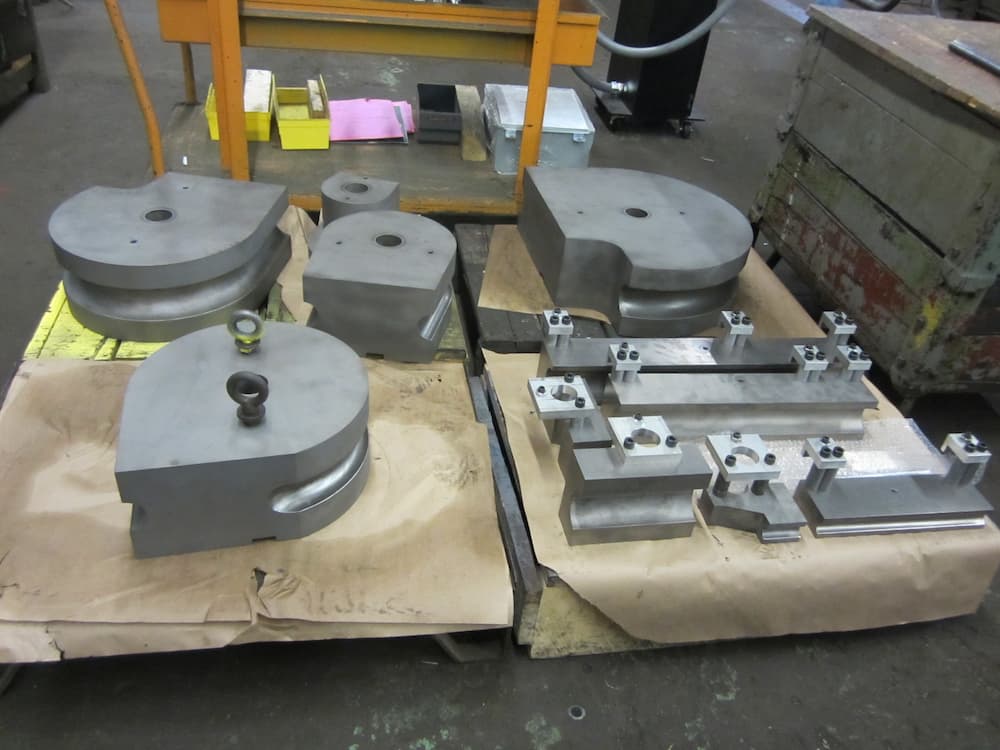
The Bending Tool Specialists Custom Tube &Pipe Bending Tooling by H&H is built on more than six decades of engineering innovation. As a brand of...
Contact us today for more information about customization options, pricing, or details about purchasing a Pines machine, tooling, parts, or services.